
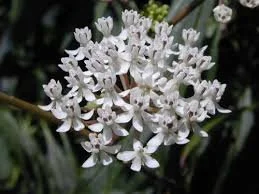
Asclepias perennis is one of my favorite milkweeds. I was puzzled for a long time because it and several other milkweeds are also known as White milkweed. It is not as readily available as some of the others, but it grows better for me and retains some leaves during the winter.
It is also known as Aquatic milkweed which means it takes more water than the drier A. tuberosa but still thrives in a normal garden. In my opinion, it is less finicky than some others that are totally dormant in winter and very slow in spring regrowth. When purchasing this variety, rely on the botanical name or you may get Asclepias incarnata which is also known as white milkweed but can come in pink shades.
I just got in a shipment of 72 small, well-rooted seedlings which actually have small blooms on them. I have repotted them in $7.50 pots and wait on them to grow. I have a few gallon pots left that overwintered outside and are $15 each.
According to the Florida Native Plant Society, A. perennis is a short-lived perennial 1-3 feet tall by 1 ft wide. It is evergreen and blooms periodically from spring to fall. It will survive in shade but bloom better in part-to-full sun and does well in bog gardens and rain gardens or bioswales.
My favorite milkweeds
Other milkweeds I carry:
.Asclepias tuberosa, the bright orange or sometimes yellow variety known as butterfly milkweed. This is the one gardeners think of first, but is not the only species which serves as a host for Monarchs. Recently, I got in a shipment listed as deep red. I am waiting to see how that blooms next year.
Asclepias incarnata , usually pink but some white available, also known as Swamp MilkWeed.
Asclepias verticillata, also white and known as horsetail milkweed, thin leaves but later bloom
I have tried but not been very successful with several green milkweed varieties as well as poke milkweed and red milkweed.
Did you know there are supposedly sixteen or more varieties native to Georgia? I will keep trying, but what grows in Blairsville may not grow in Savannah.